
Reliability report
Mercedes-Benz E-Class reliability and common faults
Based on 291,236 roadworthiness tests, led by the UK MOT. Each country is compared only with its own average for cars of the same age.
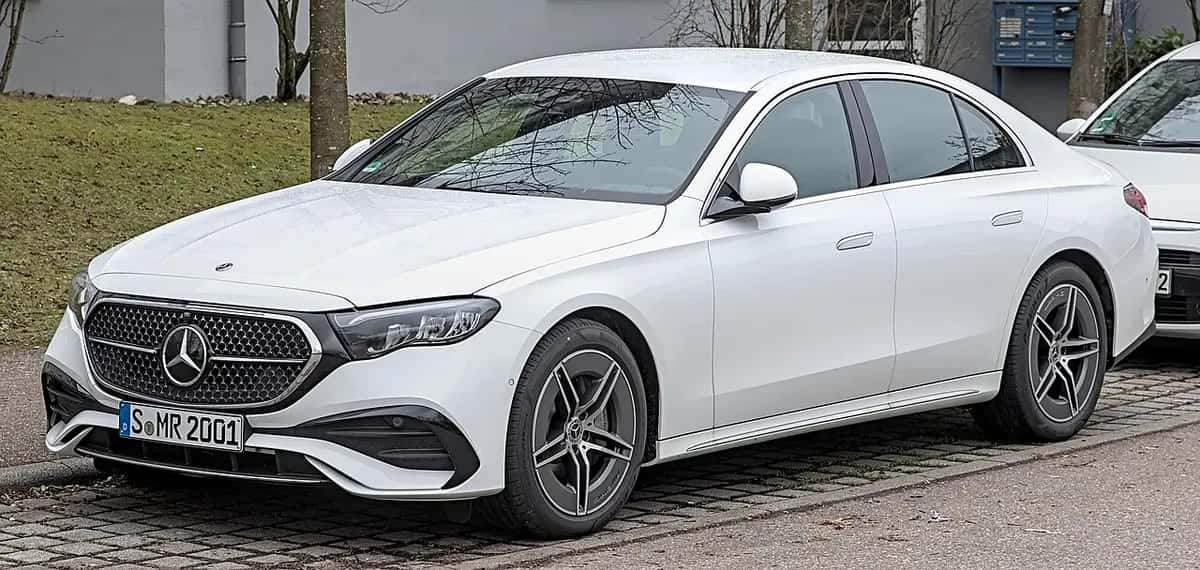
🇬🇧 United Kingdom · MOT
20.3%
fail rate · average 23.6%
much better than average
215,736 MOT tests (DVSA)
🇳🇱 Netherlands · APK
45.1%
with defects · average 50.1%
better than average
7,504 APK inspections (RDW)
🇱🇹 Lithuania · inspection
55.3%
first-time pass · average 48.0%
much better than average
67,996 inspections
Testing regimes differ from country to country – don’t compare the figures between countries; compare each one only with its own average. MOT data: contains public sector information licensed under the Open Government Licence v3.0.
Weak spots
What goes wrong on the Mercedes-Benz E-Class
How often each area fails compared with the average car of the same age (vertical line = average, 100%). Red – more often than average.
Wheelsconfirmed in 2 countries
Steering
Driving controls
Body and structure
Tyresconfirmed in 2 countries
Plates and identification
Seat belts and airbags
Exhaust and emissions
Suspension
Brakes
Lights and electrics
Visibility
Most common test failures
- 1Steering or steering knuckle ball joint with wear of 1.0 mm or less
- 2Tyre(s) with tread depth of 1.6 to 2.5 mm
- 3Tyre insufficient tread
- 4Excessive leakage of other fluids
- 5Tyre pressure not at correct value
- 6Low beam incorrectly adjusted
- 7Steering knuckle (ball joint) too much play
- 8Mechanical parts of the brake system show wear
- 9Tyre pressure monitoring system warning indicator is on
- 10Airbag / seatbelt system warning light indicates a fault
- 11Spring broken or cracked
- 12Ball joint dust cover damaged and not sealing
Results by vehicle age
| Age | 🇬🇧 MOT fail rate | 🇳🇱 APK defects |
|---|---|---|
| 3–5 years | 11.2% avg 9.9% | 37.5% avg 27.0% |
| 6–8 years | 13.8% avg 15.3% | 39.5% avg 36.7% |
| 9–11 years | 19.3% avg 22.9% | 46.9% avg 44.4% |
| 12–15 years | 27.2% avg 30.3% | 43.6% avg 55.4% |
| 16–20 years | 26.0% avg 34.6% | 49.5% avg 64.7% |
| 21+ years | 25.2% avg 31.4% | 65.8% avg 68.4% |
🇱🇹 First-time pass rate in Lithuania – by year of manufacture
| Year | E-Class | Average for year | Inspections |
|---|---|---|---|
| 2021 | 90.7% | 86.7% | 97 |
| 2020 | 80.3% | 78.6% | 132 |
| 2019 | 86.2% | 83.2% | 392 |
| 2018 | 83.0% | 79.5% | 577 |
| 2017 | 84.0% | 76.6% | 1,045 |
| 2016 | 77.2% | 72.8% | 921 |
| 2015 | 69.5% | 71.1% | 668 |
| 2014 | 72.9% | 68.0% | 1,102 |
| 2013 | 71.5% | 65.9% | 1,212 |
| 2012 | 67.2% | 63.7% | 1,166 |
| 2011 | 63.6% | 61.2% | 2,166 |
| 2010 | 63.4% | 57.3% | 2,761 |
| 2009 | 61.0% | 54.5% | 2,610 |
| 2008 | 55.4% | 52.4% | 2,031 |
| 2007 | 54.2% | 50.6% | 3,359 |
Mercedes-Benz E-Class – FAQs
How reliable is the Mercedes-Benz E-Class?+
In the UK the Mercedes-Benz E-Class fails 20.3% of MOT tests, against an average of 23.6% for cars of the same age – much better than average. In the Netherlands, inspectors found defects at 45.1% of APK inspections (average there 50.1%) – better than average. In Lithuania 55.3% pass their roadworthiness test first time (average for those years there 48.0%) – much better than average.
What goes wrong most often on the Mercedes-Benz E-Class?+
Compared with the average car of the same age, testers find faults more often in these areas: wheels, steering, body and structure, tyres.
What should I check when buying a used Mercedes-Benz E-Class?+
The most common inspection failures: Steering or steering knuckle ball joint with wear of 1.0 mm or less; Tyre(s) with tread depth of 1.6 to 2.5 mm; Tyre insufficient tread; Excessive leakage of other fluids; Tyre pressure not at correct value. Before you buy, also check the free MOT history on GOV.UK and the car’s history by reg or VIN (mileage, damage, theft).
More Mercedes-Benz models

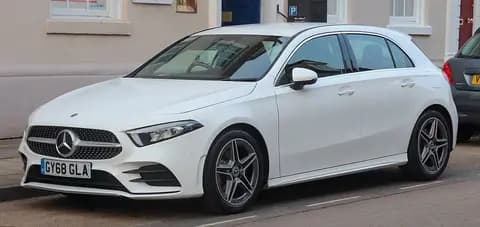



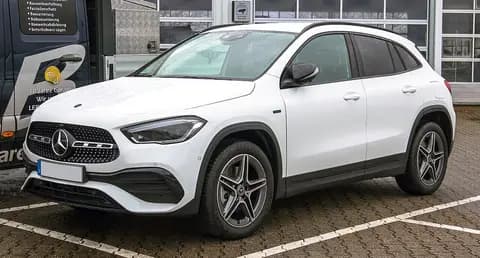


Sources: anonymised MOT test results (DVSA) – contains public sector information licensed under the Open Government Licence v3.0; APK inspection defects (RDW, open data); Lithuanian roadworthiness test results (data.gov.lt). Initial tests only; retests are not counted. Photo: Alexander-93, CC BY-SA 4.0, Wikimedia Commons (licence).