
Reliability report
Mercedes-Benz X-Class reliability and common faults
Based on 3,664 roadworthiness tests, led by the UK MOT. Each country is compared only with its own average for cars of the same age.

🇬🇧 United Kingdom · MOT
15.8%
fail rate · average 14.4%
much worse than average
3,664 MOT tests (DVSA)
Testing regimes differ from country to country – don’t compare the figures between countries; compare each one only with its own average. MOT data: contains public sector information licensed under the Open Government Licence v3.0.
Weak spots
What goes wrong on the Mercedes-Benz X-Class
How often each area fails compared with the average car of the same age (vertical line = average, 100%). Red – more often than average.
Seat belts and airbags
Plates and identification
Exhaust and emissions
Body and structure
Brakes
Wheels
Lights and electrics
Visibility
Tyres
Suspension
Steering
Results by vehicle age
| Age | 🇬🇧 MOT fail rate | 🇳🇱 APK defects |
|---|---|---|
| 3–5 years | 11.4% avg 9.9% | — |
| 6–8 years | 16.8% avg 15.3% | — |
Mercedes-Benz X-Class – FAQs
How reliable is the Mercedes-Benz X-Class?+
In the UK the Mercedes-Benz X-Class fails 15.8% of MOT tests, against an average of 14.4% for cars of the same age – much worse than average.
What goes wrong most often on the Mercedes-Benz X-Class?+
Compared with the average car of the same age, testers find faults more often in these areas: seat belts and airbags, plates and identification, exhaust and emissions, body and structure.
More Mercedes-Benz models


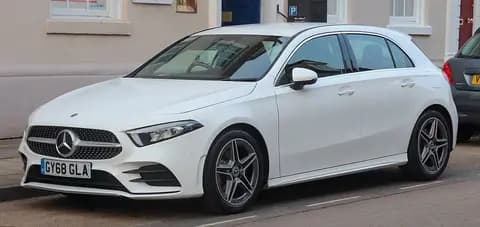






Sources: anonymised MOT test results (DVSA) – contains public sector information licensed under the Open Government Licence v3.0; APK inspection defects (RDW, open data); Lithuanian roadworthiness test results (data.gov.lt). Initial tests only; retests are not counted. Photo: Vauxford, CC BY-SA 4.0, Wikimedia Commons (licence).